Entrepreneurship

ValueImage1 1024x683

What is the Value of a Customer?

I come to this, i get a lot of young guns complaining that there is no profit or that there is no value derived from working for set asset. But no delivered tasks can be labeled as non value generating. There may not be any immediate justifiable revenue but if you go a bit calculative considering a period of time. There is a revenue. That you can see when you look for finding a Value of a Customer. Here is a simple formula by Jay Abraham which is actually a rational way to value a customer. What we do here is simply evaluating the minor profit and reducing the costs of marketing. LV = (P x F) x N – MC Here’s what it all means: LV is the life time value of a customer P is the average profit margin from each sale F is the number of times a customer buys each year N is the number of years customers stay with you MC is the marketing cost per customer (total costs/number of customers) Once you know how much you need to spend to attract a new customer, you will know how much of an incentive you can offer to a business to help attract new customers. EG a Client That buys a Software worth 1,00,000/- twice: 20000(P) x 2(F) x 1(N) – 2000(MC) 40000-2000 38000 is my LV (Life Time Value of a Customer over a Year) A client for facebook advertisement that spends 100$ a month (100$ @ 106 = 10600/- +20% Service = 2120(P)) 2120(p) x 12(F) x 1(N) – 1000(MC) 24440/- *Jay Abraham, He is known for his work in developing strategies for direct-response marketing in the 1970s. In 2000, Forbes listed him as one of the top five executive coaches in the US

What is the Value of a Customer? Read More »

Websitedead

The sudden death of the website

With a career in advertising, marketing and branding building in the era where digital content/technology plays an import role. I believe that at the end of the its efficient use to technologies to communicate. A lot of clients discuss with me on SEO, Website with Google Ranking etc. All the technological jargon fed by technically sound people who are unaware of the art of marketing. Its communication, the effectiveness to respond to your customers queries, is what makes a brand. Over the years it was verbal and inter-personal. Today it is non-verbal with virtual presence. Like wise I came across an Article By Rob LoCascio who is a founder of LivePerson. What he says is exactly what i Practiced and Perfected with my approach for building Customer Relationship and Brand for Lenovo Nepal, Megatech, Asian Batteries, Western Digital, even Family Planning Campaing – Smart Jeevan (USAID Project by HC3) When we had the task to establish these brands in Nepal, we did not have advertising budget like our competitors Dell (Golcha/Neoteric) had. All we had was Facebook. We did not even have paid/sponsored ads. With constant communications using twitter and facebook we built these brands. Customers trusted us against the lower priced products which were unauthorized/refurbished. Even if it was sold at/by the Golcha Organisation/Neoteric Nepal. While doing the Smart Jeeva, we had people make  consultation via our social media handles.  (Read about it) With Western Digital, we fought refurbished hard drives, created market for industry/task specific hard drives. (CCTV/Green Drives/Server Drives and even Partner Motivations) In Asian Batteries we had constant communication with our customers when they asked for information on their Power Backup requirements. We even created a mobile phone app to address their concerns. Constant communication to solve there curiosity,doubts, inquires resulted in fostering a good relationship. A good relationship became good synergistic partnership and that resulted in good business and eventually a strong brand presence. (Quietly but strongly) Here is the article that says the sudden death of the website. True because everyone is obsessed in following the rule instead of wanting to stand different, risk being different. Because then there is no one to compare the cost and return of investment. Here is the article:::: You may not know me or even my company, LivePerson, but you’ve certainly used my invention. In 1995, I came up with the technology for those chat windows that pop up on websites. Today, more than 18,000 companies around the world, including big-name brands like T-Mobile, American Express, Citibank and Nike, use our software to communicate with their millions of customers. Unlike most startup founders who saw the birth of the internet in the mid-1990s, I am still CEO of my company. My longevity in this position gives me a unique perspective on the changes that have happened over the past two decades, and I see one happening right now that will radically transform the internet as we know it. When we started building websites in the mid-’90s, we had great dreams for e-commerce. We fundamentally thought all brick-and-mortar stores would disappear and everything dot-com would dominate. But e-commerce has failed us miserably. Today, less than 15 percent of commerce occurs through a website or app, and only a handful of brands (think: Amazon, eBay and Netflix) have found success with e-commerce at any real scale. There are two giant structural issues that make websites not work: HTML and Google. The web was intended to bring humanity’s vast trove of content, previously cataloged in our libraries, to mass audiences through a digital user experience — i.e. the website. In the early years, we were speaking in library terms about “browsing” and “indexing,” and in many ways the core technology of a website, called HTML (Hypertext Markup Language), was designed to display static content — much like library books. But retail stores aren’t libraries, and the library format can’t be applied to online stores either. Consumers need a way to dynamically answer the questions that enable them to make purchases. In the current model, we’re forced to find and read a series of static pages to get answers — when we tend to buy more if we can build trust over a series of questions and answers instead. The second problem with the web is Google. When we started to build websites in the ’90s, everyone was trying to design their virtual stores differently. On one hand, this made them interesting and unique; on the other, the lack of industry standards made them hard to navigate — and really hard to “index” into a universal card catalog. Then Google stepped in around 1998. As Google made it easier to find the world’s information, it also started to dictate the rules through the PageRank algorithm, which forced companies to design their websites in a certain way to be indexed at the top of Google’s search results. But its one-size-fits-all structure ultimately makes it flawed for e-commerce. Now, almost every website looks the same — and performs poorly. Offline, brands try to make their store experiences unique to differentiate themselves. Online, every website — from Gucci to the Gap — offers the same experience: a top nav, descriptive text, some pictures and a handful of other elements arranged similarly. Google’s rules have sucked the life out of unique online experiences. Of course, as e-commerce has suffered, Google has become more powerful, and it continues to disintermediate the consumer from the brand by imposing a terrible e-commerce experience. I am going to make a bold prediction: In 2018, we will see the first major brand shut down its website. There also is a hidden knock-on effect of bad website design. As much as 90 percent of calls placed to a company’s contact center originate from its website. The journey looks like this: Consumers visit a website to get answers, become confused and have to call. This has become an epidemic, as contact centers field 268 billion calls per year at a cost of


The sudden death of the website Read More »

World Currencies 20573132 1024x747

Pricing Method

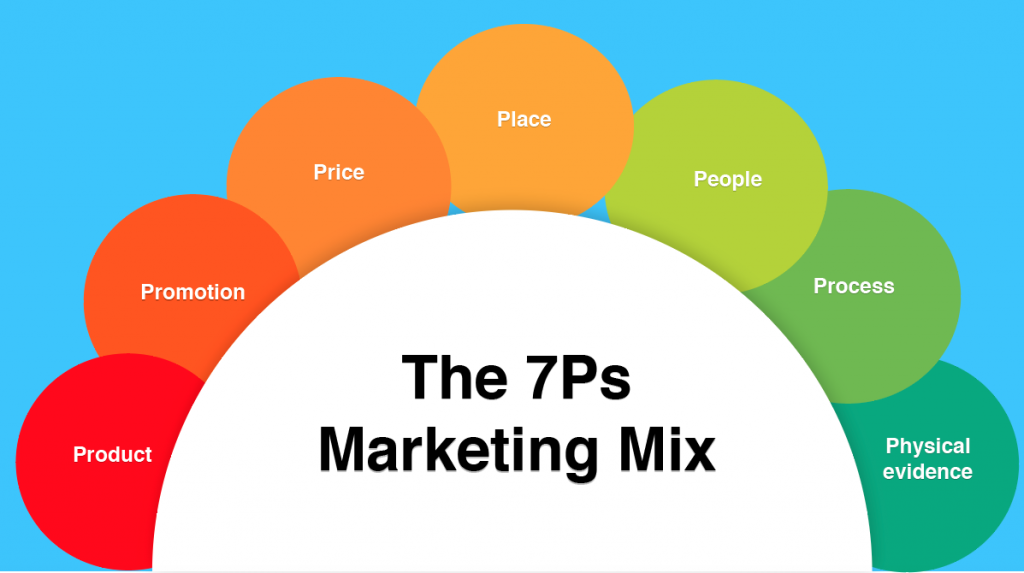
Price is a very important element in marketing mix. It makes the difference in competition.It is a direct source of revenue. Covers costs and generates profits. Pricing is the factor that very much influences the buyers purchase decision. Pricing strategy is determined by Demand for a product Cost for a product Competition of the product. (among other factors)

Pricing Method Read More »

71403 A

Sales Forecasting

Small Word,  Big Definition A process that will help prepare you for an upcoming scenario. Using past data (History, Trends) to reduce risks due to uncertainty.   Here are my simple approach to making a forecast (in Business/Marketing/Sales) Sales forecast, is a prediction of sales value over a period of time. This is the basis of marketing mix and sales planning. Short Term: Usually a one year period where sales budget is linked to it thus giving an overall picture for the firms performance. This gives a picture to plan sales resources and prepare expenditure required to meet the sales performance. The helps with assessing cash flow, in / out. The needs and sources. Long Term: Usually a 5 years’ forecasts. The focus is on Capital Budget needs and process of the firm. It provides for the changing the market strategy of the firm. It includes references to emerging product that the market needs. New market segments that needs to be created, reviewing distributing networks, promotional programs. Reorganizing sales force, marketing setups. Methods of Sales Forecasting: There are five methods: 1) Executive Judgment Based on experiences, past performances, intuitions. Works well when the market is stable. Salesforce composite method and jury of executive opinion are the two popular forms used in this method of sales forecasting. 2) Survey: Prediction can be ascertained by collecting a response from a survey. Customer Survey: to determine the changes in tastes and preferences, types and value of price opinions of customers. Sales force Survey: to determine territory take offs, company’s market share, competitor’s analysis from your sales channel/team. Dealers are also included in sales force survey. Expert Survey:  to determine the survey reports from the view point of the industry experts and consultants. This helps identify new dimensions for consideration of managements. 3) Time Series Analysis: Helps locate trends, seasons, cyclical and random factor changes associated with the past data. Experience reveal that time series analyses for sales forecasting are quite accurate for short and medium term forecasts and more so when demand is stable or follows the past behavior. 4) Correlation and regression methods: The method examines the past sales volumes with one or more other variables. The variables considered are usually population, per capita income, or gross national product.  The regression analysis is carried out to compare sales with that of changes in economics, competition, and internal variable of the firm.  The goal is identifying the association of factors that influences performance. Advance version will have: Cause and Effect Relationship. Econometric model, Input-Output Model, Life-Cycle Analysis, New Product’s Growth rate on S-Curve 5) Market Tests: Used to develop one time forecasts particularly to new products. This gives insight to various elements of marketing mix vs consumer’s actual purchases and responsiveness of the product. Experiences puts out that combining various methods results greatly surpasses most individual methods of sales forecasts. Combined use of quantitative and qualitative methods of sales forecasting in a given situation rather than using either two can improve accuracy of the forecasts. Here is a 1971 Review Article that was published in Harvard Business Review. (Click Here)    

Sales Forecasting Read More »

Keeping Your Clients Happy Lbsr 974x296

Customer satisfaction: keeping your valuable clients happy

Hi, Here is an excerpt article i found in a Research Material from London Business School Review. Which customers generate the most profit for your business and does it pay to put their happiness above all others? Vasiliki Kostami explains A research carried out on a nightclub. Some women will happily work out in a gym that welcomes both genders. Others would rather attend a ladies-only club, a factor that will lead to dissatisfaction if their expectations aren’t met. The same principle applies to bars. Many men like venues with more members of the opposite sex, but women prefer places that attract similar numbers of males and females. “While the venue and facilities may be the same, people’s perception of the service quality is unique and often influenced by other customers” While the venue and facilities may be the same, people’s perception of the service quality is unique and often influenced by other customers. Issues such as the age, socioeconomic status and perceived intelligence of other people – be they gym members, club-goers or holidaymakers – can also affect someone’s level of satisfaction in a positive or negative way. So how do service providers go about establishing their customers’ specific preferences and understanding which patrons are willing to pay more to get what they want? Vasiliki Kostami, Assistant Professor of Management Science and Operations, explores this issue in her research paper ‘Pricing and Capacity Allocation for Shared Services’. The study looks at how businesses facing this challenge can use pricing and capacity allocation, such as restricting access to certain people, to appeal to specific customers. “Nightclubs may introduce pricing promotions, giving women free or cheaper drinks in order to attract more of them,” Dr Kostami says. She adds that a cruise ship operator could choose to restrict access by catering to just singles, couples or more mature holidaymakers, while gym membership might be open to women only. Men often pay more to enter a nightclub to compensate women who have to share the venue with them Man-free zone: restricting access to women only Restricted access sounds like a simple way to satisfy certain customers, but it can create a huge headache for businesses. Fitness USA angered some customers – mostly male – when the management decided to make two of its gyms in Michigan women-only. The new policy also disappointed one female who was unhappy about her monthly membership fee increasing from US$19 (£14.75) to $24 (£18.6). Despite the criticism, Fitness USA held firm. Introducing new pricing or restricted access is less problematic for other sectors, according to Dr Kostami. “The cruise industry can organise trips for church groups, Star Trek fans or singles without being accused of excluding others,” she says. “Such cruises target a homogenous group of people who share a common interest, helping to spark conversation and develop bonds among passengers. In these cases, the service experience and pricing strategy is designed to appeal to a particular customer segment. This can only happen once a distinction is made between those who want the service and the people who aren’t interested.” These examples show that the reaction to charging different types of people varying prices or limiting their access to certain services depends on the industry. “The challenge for businesses is how to maximise profits when making decisions that could potentially anger customers or create legal issues” The challenge for businesses is how to maximise profits when making decisions that could potentially anger customers or create legal issues. With their venues’ capacity in mind, companies have to ask themselves: which customers should we target, without necessarily trying to cater to as many people as possible, and charge them based on how much they are willing to pay. They also need to establish whether: to offer an exclusive service to a specific customer segment or roll it out to many people who share the same venue customers who fall into different categories or segments are charged differently the venue is exclusive to certain customer segments (non-smoking restaurants in countries where people can still smoke in eateries), or always available to all. Dr Kostami’s research suggests that businesses may be better off if they target just one customer segment rather than several – especially if price discrimination isn’t an option. This could be for legal reasons or because different types of customers aren’t happy about sharing the same venue. Take Fitness USA’s decision to convert two venues to women-only gyms. Restricting access to females means that most women are willing to pay more for the overall service. Moreover, the company doesn’t have to worry about what to charge men, so there’s no danger of price discrimination. This problem could arise if, for example, women were charged less to share the gym with men. Another option to restricting access is for service providers to introduce a ‘time allocation’ policy, where they offer exclusive use of their venue to different customers at varying times. Getting the pricing wrong or charging different people varying fees can alienate one or more customer segments The cost of open house versus exclusive access For a service provider that relies on price, the choice between giving certain people exclusive access and making the whole venue available to all depends on net appreciation between customer segments. Net appreciation refers to the average level of satisfaction based on how negative or positive people feel about other customers who receive the same service. “If the net mutual appreciation is positive, businesses will more likely hold events or provide services where customers from different segments can interact. If negative, it might be better to give each customer class exclusive access at the venue or let them use it but at different times,” Dr Kostami says. But how does net appreciation relate to price? In a bar with no gender restrictions, males may pay more. This is to compensate women who have to share the same venue with men. The prices change when restricting access to one or several customer segments.

Customer satisfaction: keeping your valuable clients happy Read More »

VINTAGE FIREARM COLLECTION 1024x819

What is Marketing?

Marketing is a function that begins with a “Product”, followed by an objective to direct its flow. Its Selling, Advertising, Promotion –either one or all. The American Marketing Association defines marketing as “Marketing is the performance of business activities that directs the flow of goods and services from producers to consumer or user.”

What is Marketing? Read More »